The primary objective of the Curriculum team, led by Doris Wolf and Margaret Dumas, is to develop resources and provide training for educators to support the use of the Six Seasons picture books and apps in formal and informal educational settings. The resources provide a basis for land-based education activities, Cree-language teaching, and the teaching of curricula in and across the areas of Social Science, English Language Arts, Science and Arts. The team has been well supported by a number of curriculum writers over the years: Audrey Barkman-Hill, Latika Raisinghani, Connie Wyatt Anderson, Renée Gillis, and Dawn Sutherland. Our partners include the Indigenous Inclusion Directorate (IID); the Manitoba First Nations Education Resource Centre (MFNERC); and the University of Winnipeg’s Faculty of Education Access program, especially its Community-Based Aboriginal Teacher Education Program (CATEP).
-

Doris Wolf
Team Leader
Doris Wolf is an Associate Professor in the University of Winnipeg’s Department of English and Faculty of Education- Access Program. A settler scholar and Indigenous ally, she researches and publishes in the areas of Canadian Indigenous children’s texts and Indigenous content in early and middle years education and curriculum. In 2014, Wolf organized an intensive, week-long Summer Institute at the University of Winnipeg to explore how to use Pīsim Finds Her Miskanaw in early and middle-years classrooms. Since 2017, with the formal beginning of the Six Season Project and SSHRC Partnership Grant, she has led the curriculum team working closely with the team’s community lead, Margaret Dumas.
-

Margaret Dumas
Team Leader
Margaret Dumas is a woman of Cree and Austrian ancestry. She is a mother to four children and a grandmother to thirteen grandchildren. Margaret was born in Churchill, Manitoba but was mostly raised in a little Cree and Métis town along the Hudson Bay line called Pikwitonei. Margaret has lived in the North most of her life and has been an educator in both the North and South for over 30 years.
Margaret has a 5-year Bachelor of education degree from Brandon University. She received her grade 12 from Frontier Collegiate at Cranberry Portage and later received her TESL (Teaching English Second Language) certificate from KCC which is now UCN. Margaret was and is still very involved in the revitalization of the Cree language and with the development of the Cree language curriculum and community school in Thompson and throughout other parts of Manitoba. Her interests have always been with Indigenous education, with the reform, and in the revitalization of the Cree language and culture. Margaret is a Cree Bilingual teacher at Wapanohk Community School with Mystery Lake School Division. She hopes to pass the importance of the language and culture to all the youth she teaches and hopes that her children and grandchildren will carry on her work in the future.
In her free time, she also enjoys working on committees and facilitating workshops on Cree culture and worldview. In addition, she loves to play her guitar and sing in both Cree and English, often performs at local coffee houses, and as well enjoys cooking, baking, writing and camping.
-

Audrey Barkman Hill
Audrey Barkman Hill brings a PhD that focuses on the teaching of literature, a thirty-year career in education, and a love of reading and writing to her current role as Writing Lead on the Six Seasons Curriculum Writing team. Her professional interest is in the impact of literature on identity construction and on the norms and values by which we construct societies. “Artistically,” she says, “my interest in literature is the aesthetics, or the reflection of art, culture and nature, by which writers create a version of themselves and their worlds.”
Audrey says she is pleased to be working with the Six Seasons writing team on creating a curricular guide that offers educators an exciting and productive way to teach historically and culturally accurate materials on a specific Indigenous group -the asiniskaw īthiniwak. Her hope is that the lessons and activities developed by the writing team for māskīkīy miskanaw: The Medicine Way will promote interactive student partnerships, reflective personal thinking and active engagement with Six Seasons narratives.
-
Connie Wyatt Anderson
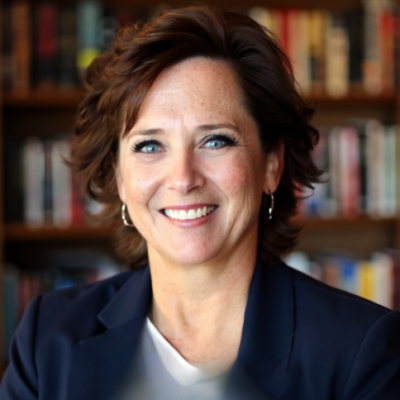
Connie is a long-time educator and curriculum developer. She has been involved in the creation of student learning materials and curricula at the provincial, national, and international level, and has contributed to a number of school publications. She co-authored the grade 11 Canadian history textbook used in Manitoba schools and has written for the Globe and Mail, Canada’s History, Canadian Geographic, and the Canadian Encyclopedia. She was the instructional designer of Manitoba’s Treaty Education initiative and continues to train the province’s teachers and school leaders as Treaty Education Lead. She is chair of the Geographical Names Board of Canada, past vice-president of the Royal Canadian Geographical Society, and sits on the National Advisory Council of Canada’s History. Connie has received several awards including the 2014 Governor General’s Award for Excellence in Teaching Canadian History, the 2017 Manitoba Metis Federation’s Distinguished Leader in Education, and the 2024 King Charles III Coronation Medal. Connie is a proud Red River Metis with ties to the Klyne, Chartrand, and Delorme families. She holds a B.Ed., M.Ed. and lives west of The Pas in the Carrot Valley.
-
Latika Raisinghani
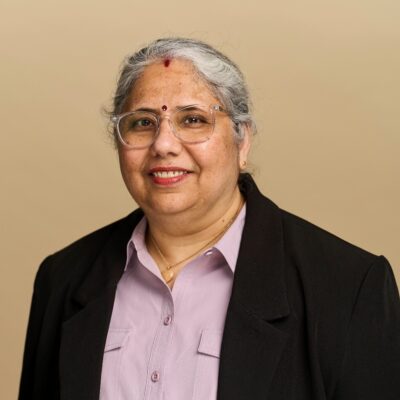
Dr. Latika Raisinghani is currently engaged with the University of Winnipeg as an Assistant Professor and with the University of Manitoba as an Adjunct Professor. As a first-generation Canadian citizen, Dr. Raisinghani acknowledges her presence as an uninvited guest in the ancestral lands of the Indigenous Peoples of Canada. As a racialized woman scholar, and as a daughter, sister, wife, mother, and as a friend, she finds herself privileged to live, learn, teach, and raise her children in the ancestral lands of diverse Indigenous peoples of Canada whose relationship to this land continues to this day and whose histories, languages, and cultures continue to guide our thoughts and actions. Dr. Raisinghani has a PhD in Curriculum Studies with a focus on science and mathematics education from the University of British Columbia, Vancouver, Canada.
-

Brooke Buchan
Curriculum Team (2025-2026)
Taanshi, Brooke Buchan dishinikaashon. En Michif niya. Ma paraañtii kayaash oschi la vaalii rivyeer roozh, pembina, St. Laurent, Lake Manitoba eekwa.
My Name is Brooke Buchan. I am a Metis student at the University of Winnipeg. My family comes from the Red River Valley with additional ancestral ties to Pembina, St. Laurent, and Lake Manitoba. I am a bead work artisan in my spare time. I make earrings, moccasins, and now gauntlets! I am in my final year of my Bachelor of Arts degree. I am majoring in Indigenous Studies and minoring in Urban and Inner-City Studies. I am a research assistant on the Six Seasons Project’s Curriculum Team. I came to Six Seasons through the Indigenous Summer Scholars Program, where I did research on the significance of tea in Rocky Cree culture, worldview, and identity. As a part of my research, I am assisting with the Curriculum Team's production of a teacher's guide for the third instalment in the Six Seasons series, Māskīkiy Miskanaw, The Medicine Way. Maarsi.
-

Genevieve Field
Curriculum Team (2025-2026)
Genevieve Field is an MA student in Cultural Studies in the Curatorial Stream. She currently works with the curriculum team for the Six Seasons project as a research assistant, where she is helping develop a Community of Practice for teachers who use the Six Seasons teaching guides. This growing community encourages teachers to connect with peers and members of the curriculum team to share their experiences and offer suggestions to all who use the teaching guides within their practice. Genevieve holds a Bachelor of Arts degree from the University of Manitoba, majoring in Art History with a minor in English. After completing her degree, she hopes to pursue a career in curatorial work, with interests that range from Renaissance art to the work of local Winnipeg artists.